violence and gender
Male War – Female Peace?
The exhibition Violence and Gender examines the visible and less visible roles of women and men in war and peace. Just as war and peace are not absolute conditions, gender roles are far less clear-cut than the familiar opposition of the peaceful woman and the violent man might suggest.
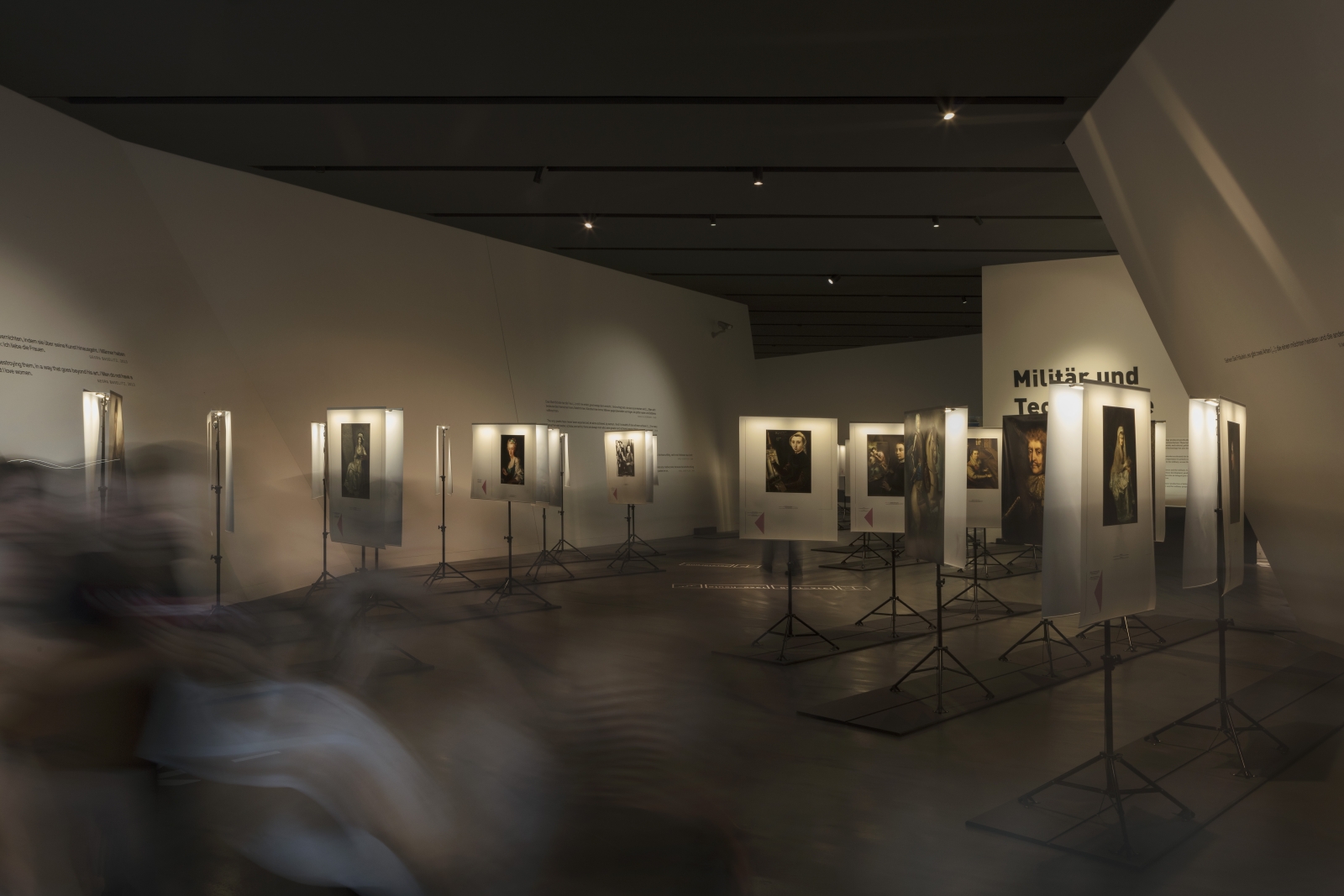
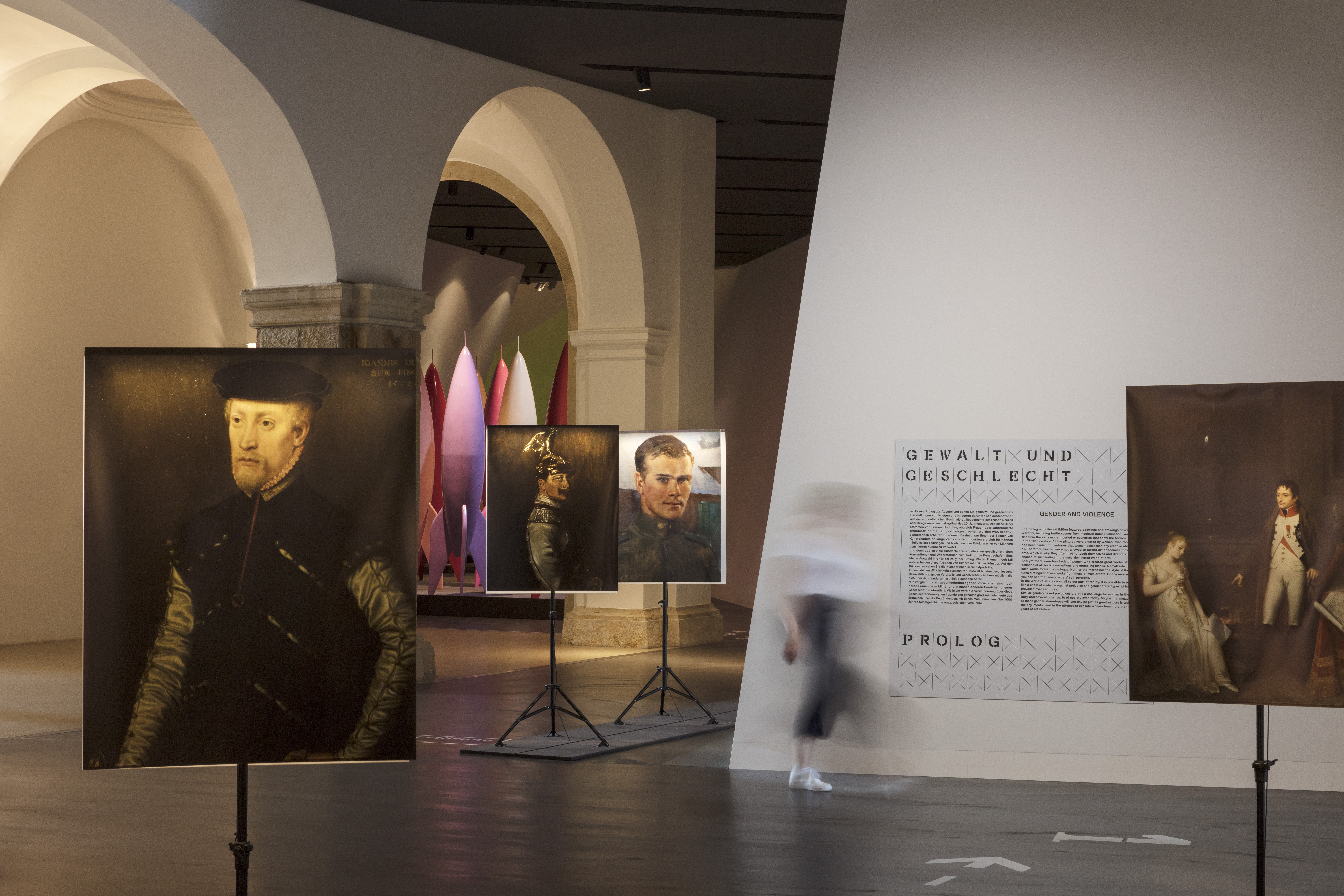
The prologue introduces this ambiguity through a simple shift of perspective. Freestanding easels display reproductions of historical battle scenes and portraits of rulers – conventional representations of power and violence. Yet the subject of the prologue is not what these images depict, but who created them: every work was painted by a woman. Only by moving around the images do visitors discover portraits and biographies of the artists on their reverse sides. A change of position reveals a different narrative.
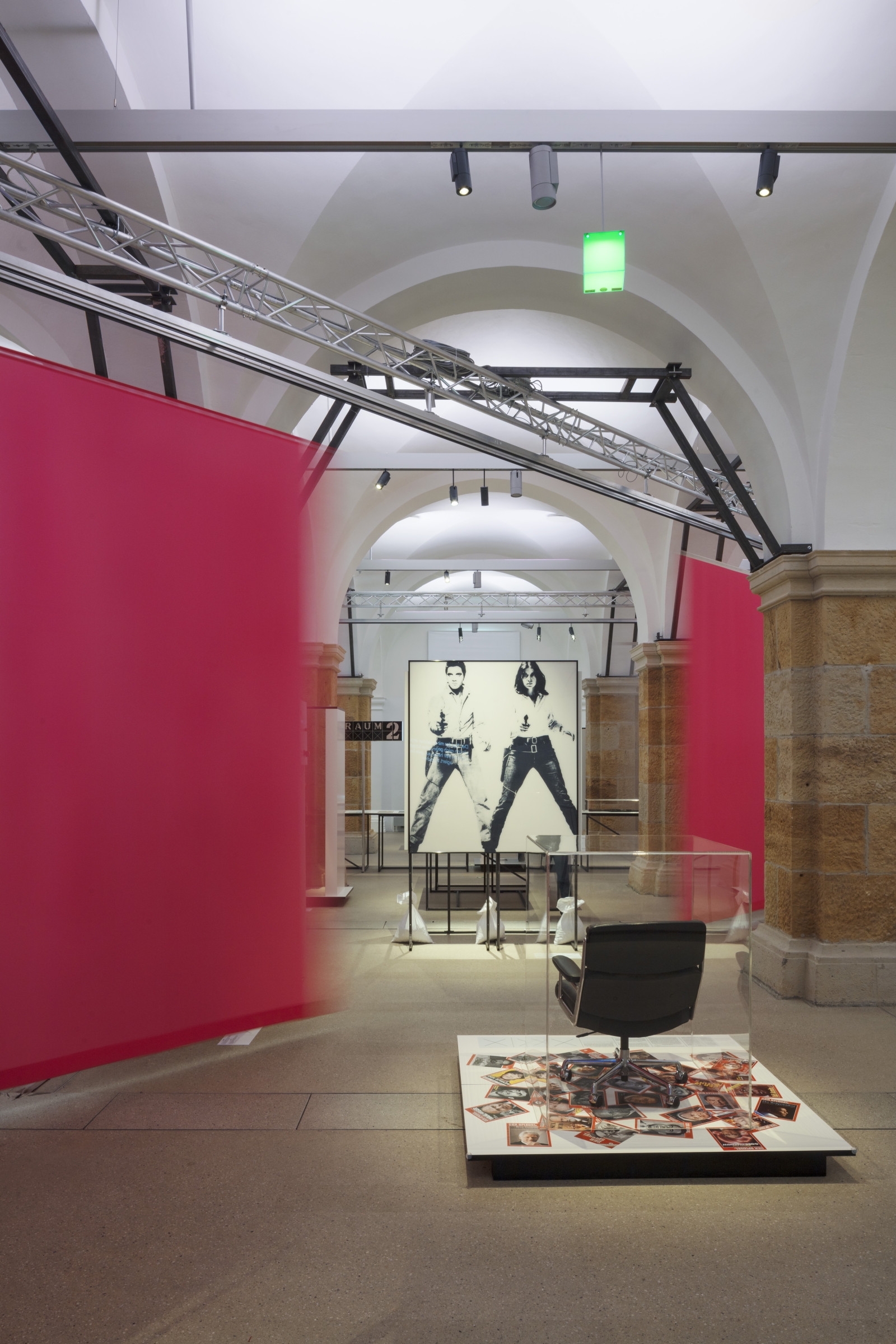
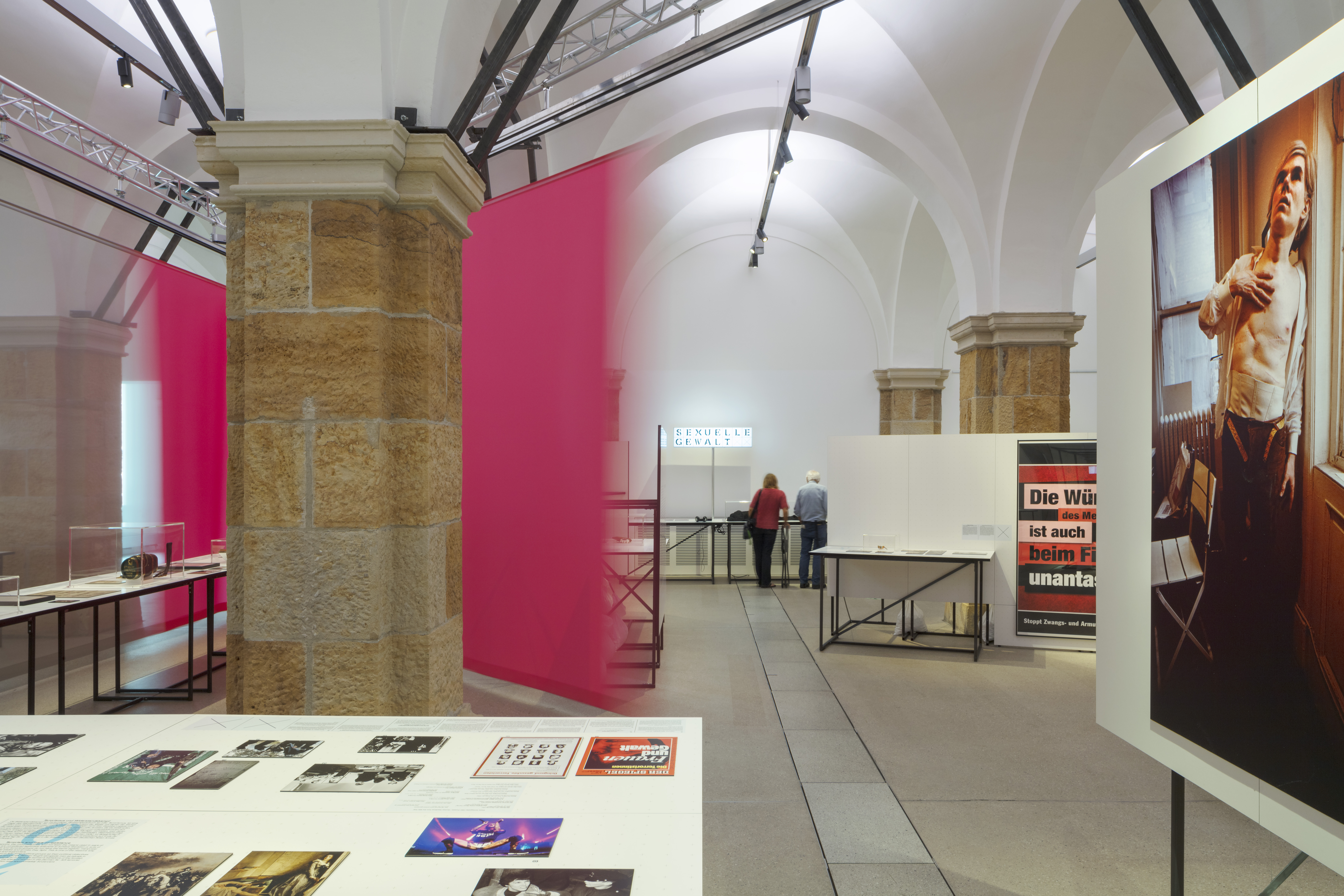
The main exhibition extends this principle spatially. Its themes unfold across the museum’s historic galleries and an industrial hall in an adjacent building. In the first section, 'Power and the Military', large-scale translucent, movable partitions choreograph both movement through the space and views of the exhibits. Constellations of objects and themes emerge, shift and dissolve; relationships are created through movement and depend on the position of each visitor.
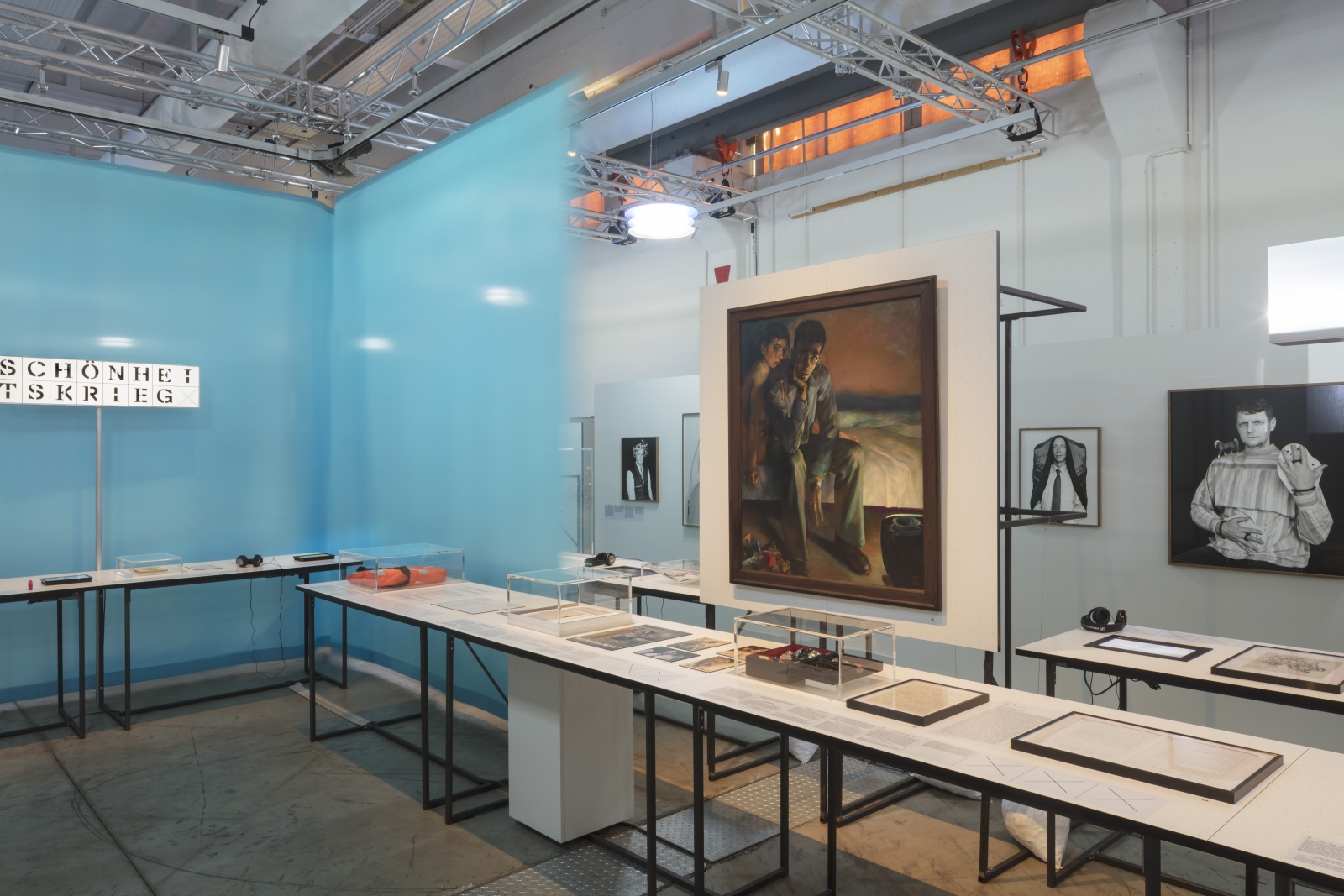
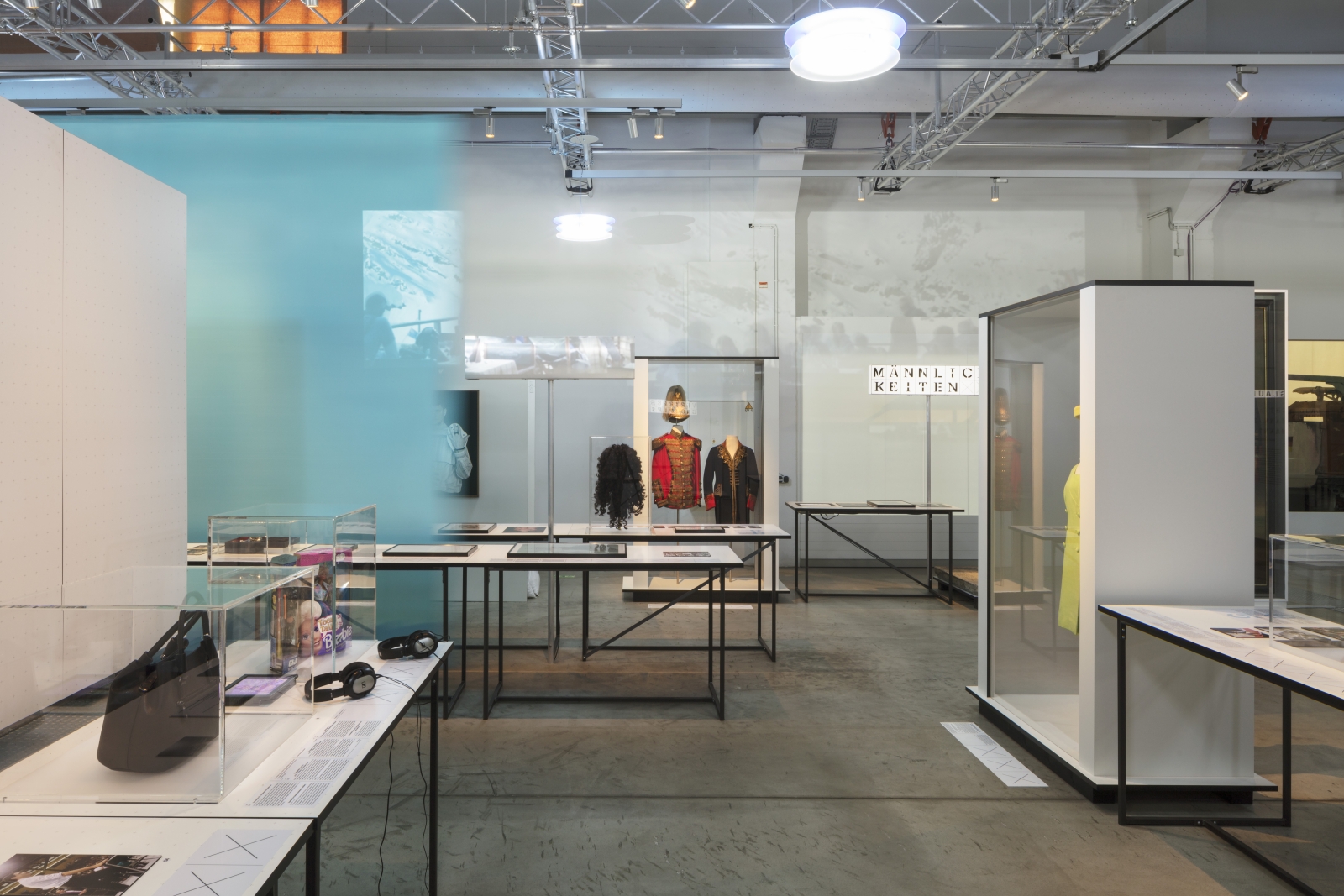
In the former industrial hall, the movable partitions continuously form and dissolve temporary spaces. Here, objects and themes are more explicitly structured, providing a theoretical framework for what has previously been encountered. The exhibition does not aim to resolve contradictions, but to create spaces in which different readings, associations and positions can coexist and be critically examined.
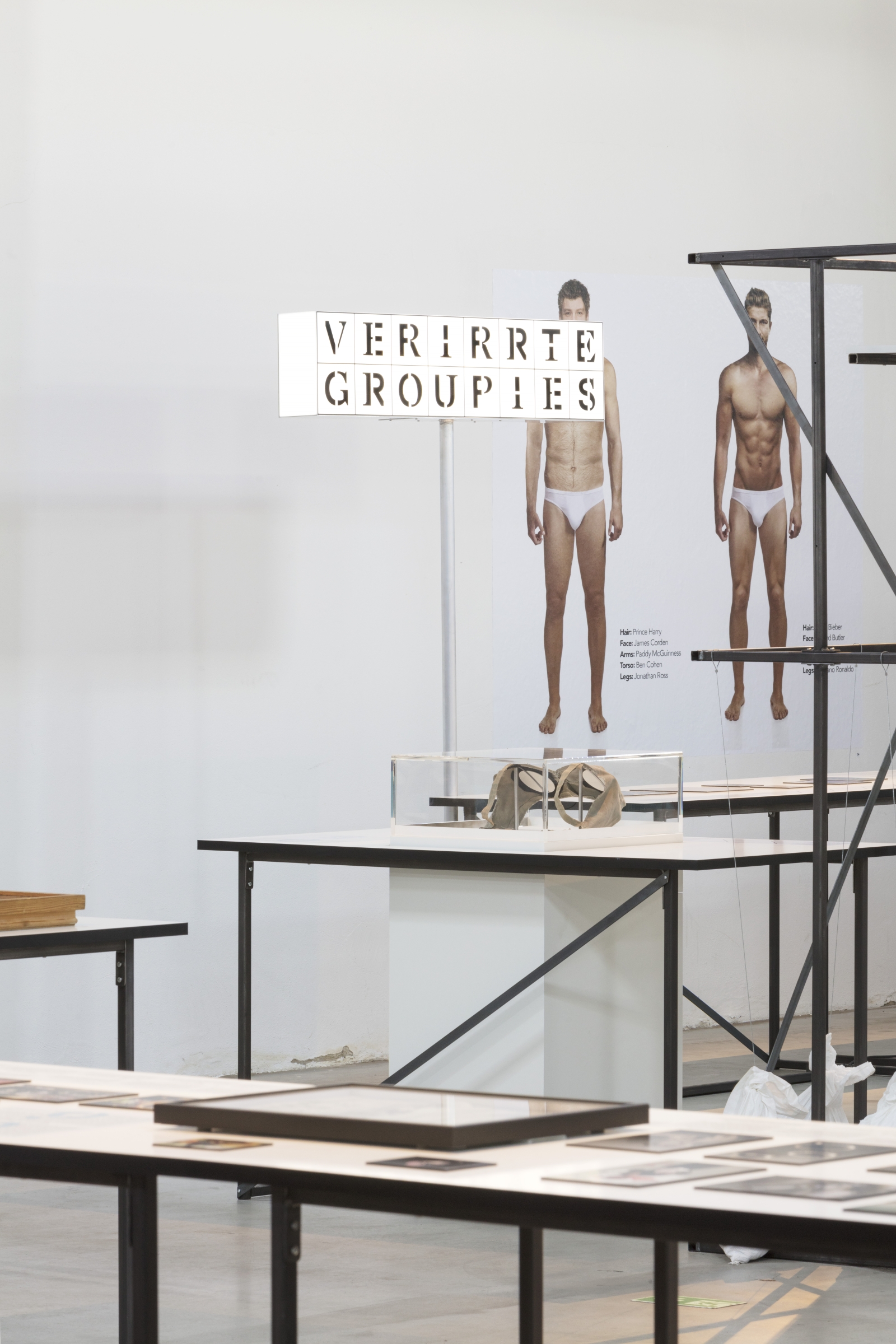
The content is further developed through thematic display tables and vitrines alongside individually positioned key exhibits. A deliberately direct and restrained exhibition architecture gives precedence to the objects and the narratives they carry. Illuminated signs provide orientation while allowing visitors to follow different thematic paths through the exhibition.
Outside, the exhibition intersects with 'Targeted Interventions'. In sculptures evoking both missiles and human bodies, artists from six countries explore analogies between bodies of violence and gendered bodies. This exhibition within the exhibition was funded by the German Federal Cultural Foundation and curated by Sarah Sigmund and Robert Lewetzky.
cooperation with: Holzer Kobler Architekturen.
credits © Jan bitter