tanja kullack

Architecture as Feminist Practice

Intervention describes forms of architectural action that engage directly with societal, political and disciplinary discourse. Feminism serves as a systemic strategy for analysing and transforming societal power structures. Interventions expose structural inequalities, reveal fractures and controversies, and extend architectural debate into the public realm.

“The truth will set you free. But first it will piss you off.”
Gloria Steinem

Architecture is inherently political. Critique, position and public discourse are integral to architectural action. Architecture develops its societal relevance through built space as well as through the discourses, conflicts and processes of negotiation in which it participates.

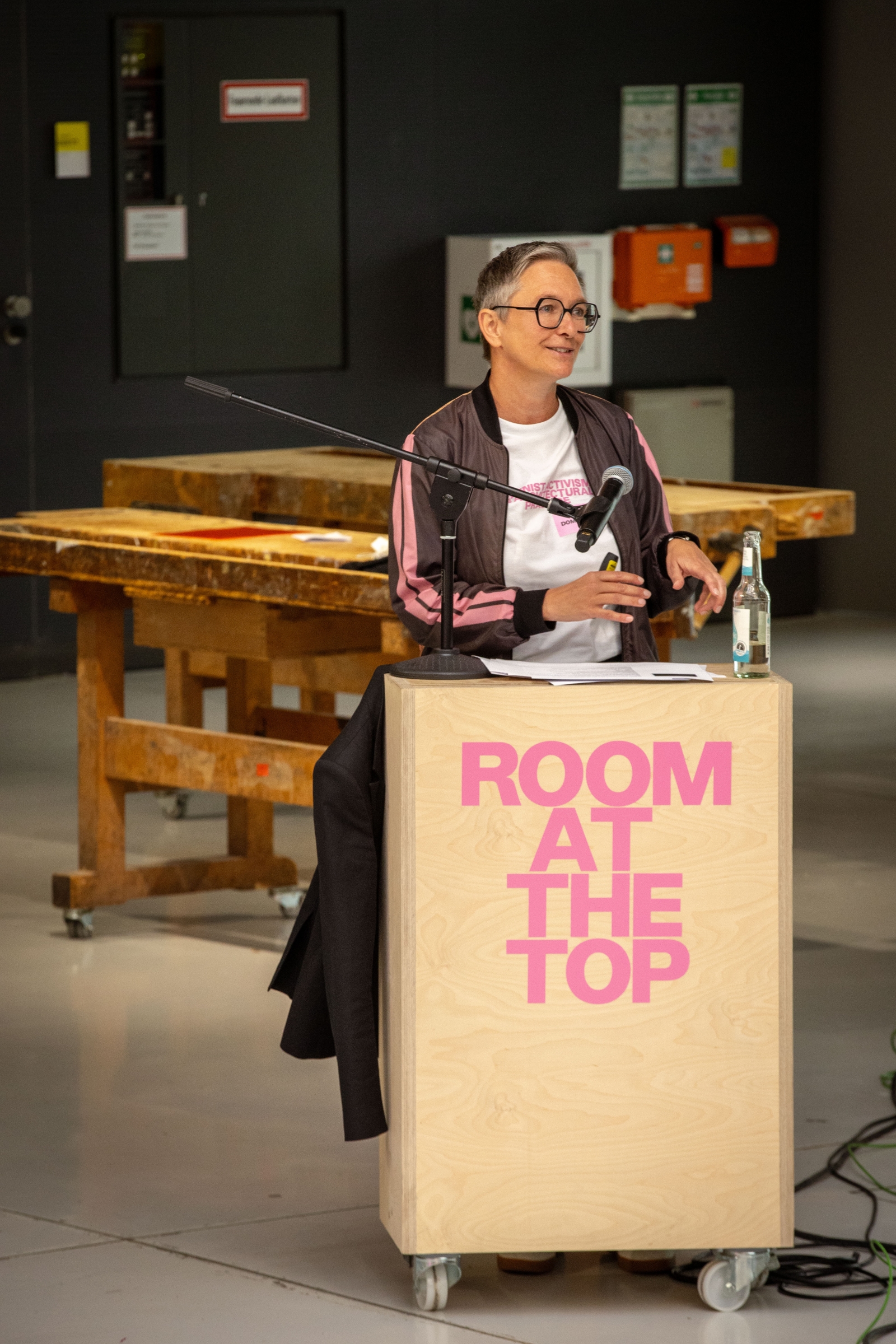
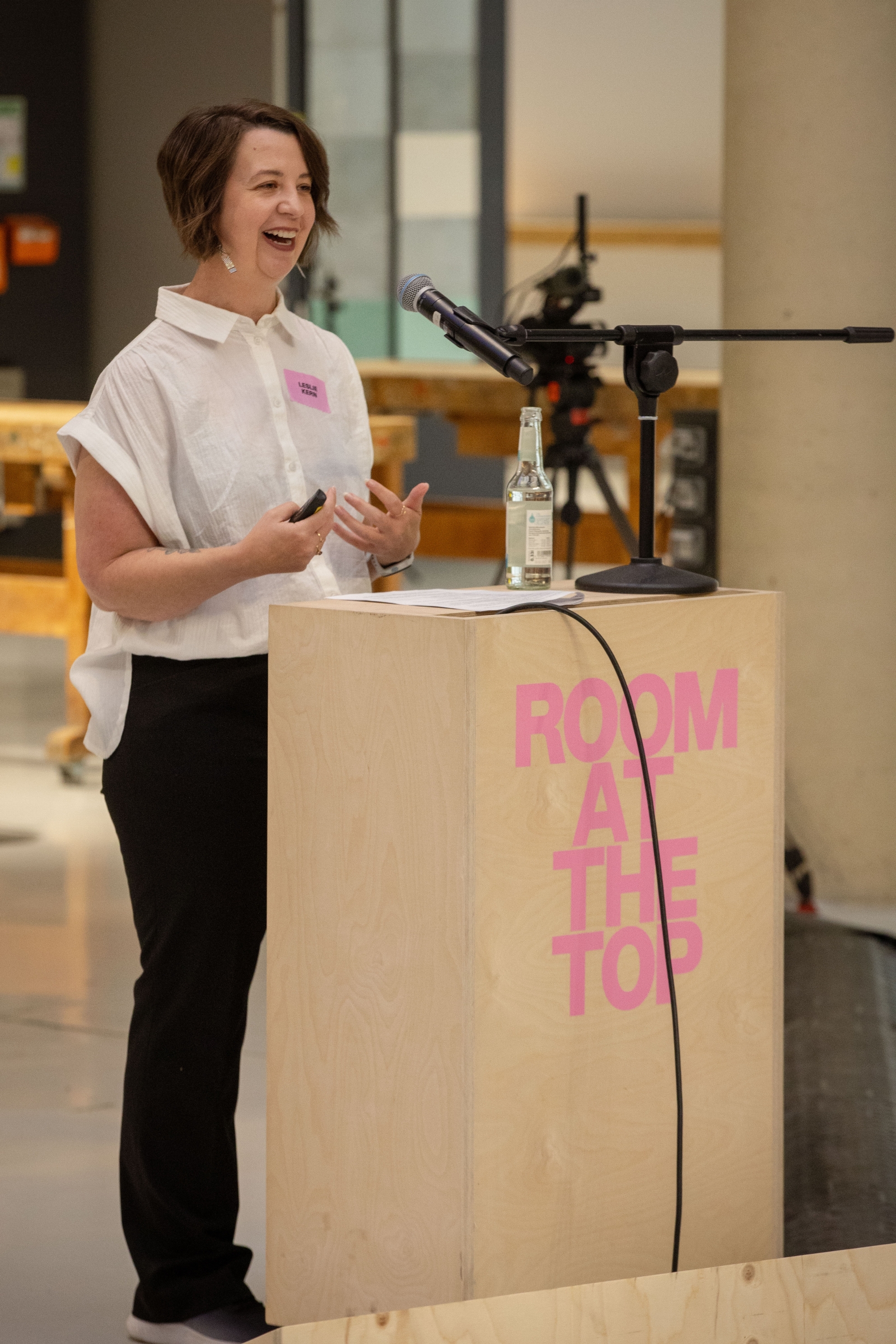
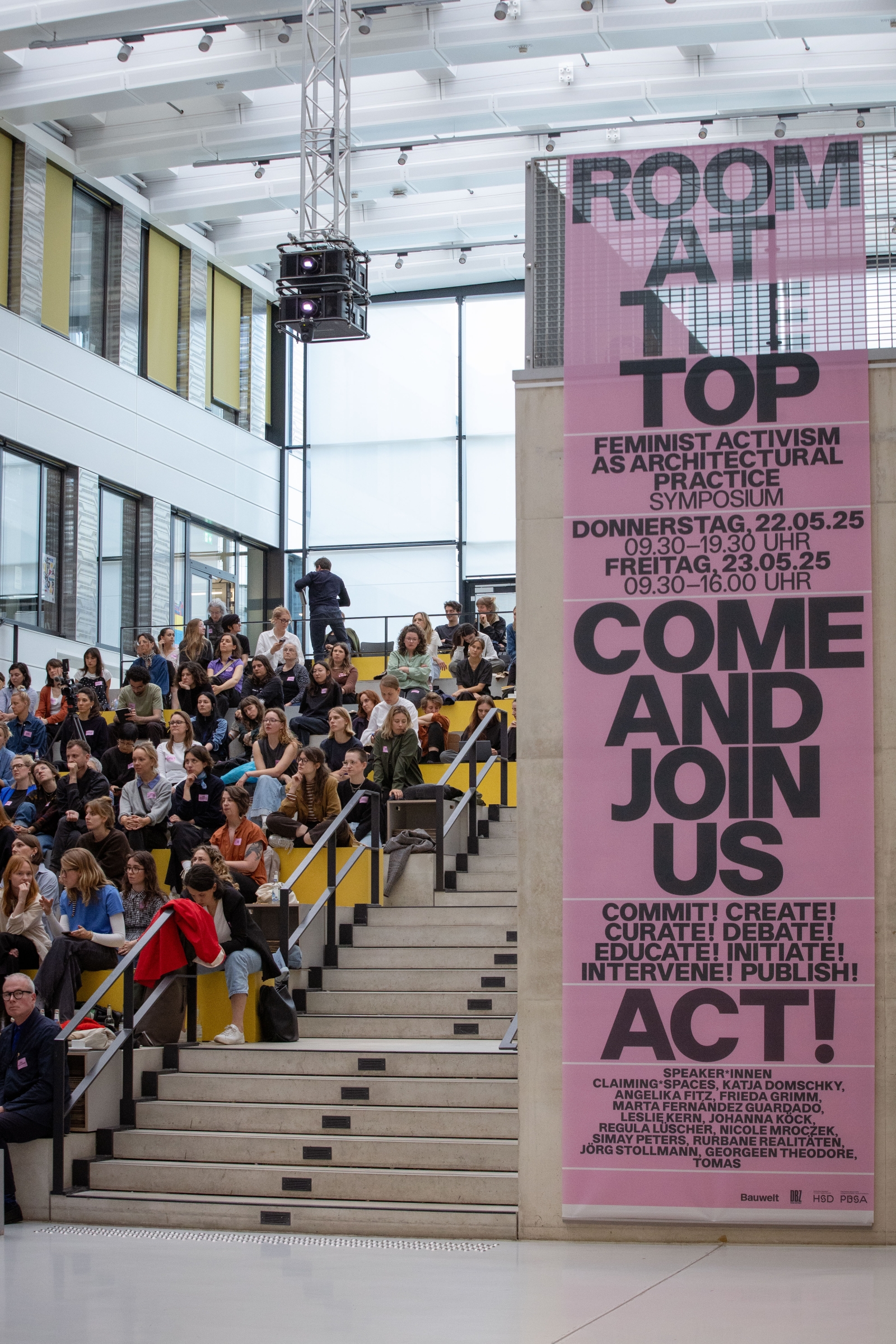
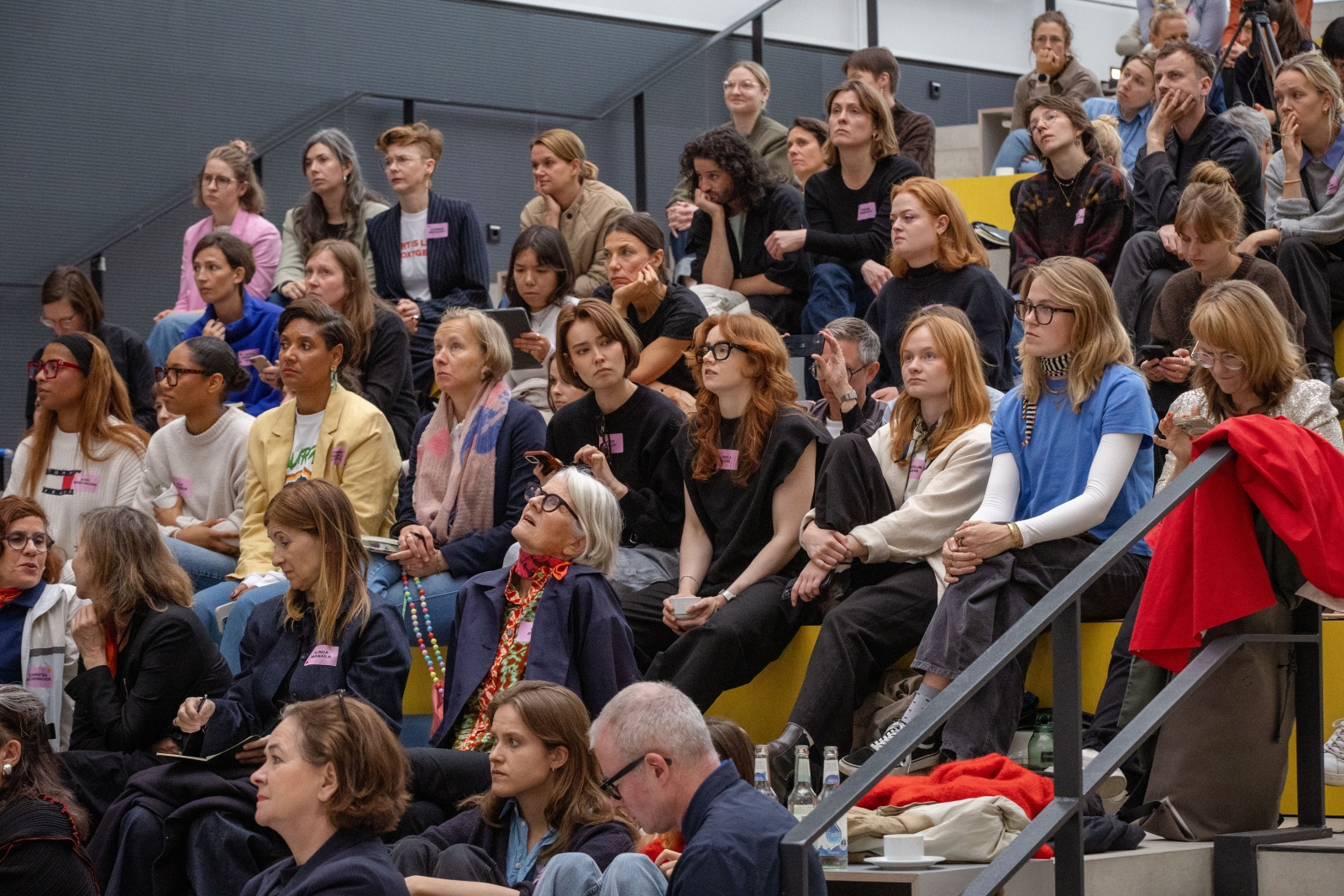
Interventions emerge through different constellations and collaborations, within and beyond institutions and organisations, and across a range of formats. One example is the symposium ROOM AT THE TOP! – Feminist Activism as Architectural Practice, held at the PBSA/HSD. Taking Denise Scott Brown’s essay Room at the Top? Sexism in the Star System in Architecture as its point of departure, the symposium explores the significance of feminist activism for architecture, teaching, practice and disciplinary discourse. Within university policy and institutional development, this position informs the work of the Gender Diversity Action Team (GDAT) at Hochschule Düsseldorf. The publication Architecture – A Women’s Profession similarly operates as an intervention within architectural discourse.

Architecture both reflects societal power structures and provides a means for transforming them. Eliminating structural inequalities is intrinsic to the development and democratisation of the discipline. In this context, feminism provides an analytical and transformative framework that connects critical thinking, empowerment and democratic processes of negotiation.

ROOM AT THE TOP

More than 35 years after the publication of Denise Scott Brown’s seminal essay Room at the Top? Sexism and the Star System in Architecture, gender equality has yet to be achieved—both within society at large and within the discipline of architecture.

In an era shaped by overlapping crises and the increasingly dystopian realities of climate change, it may seem understandable that intersectional gender equality has receded from the political agenda. At the same time, however, the rise of right-wing populism has opened a new and troubling line of conflict: anti-feminism has become a central element of right-wing populist discourse, functioning as a bridge ideology that extends well into the political mainstream.

Eliminating structural discrimination based on race, class, and gender strengthens the discipline itself by advancing its democratization. Feminist political activism in architecture therefore seeks not merely to improve existing conditions but to transform them fundamentally by addressing structural injustice.

What do these political developments mean for questions of equality in architecture and planning? How can architecture contribute to establishing and strengthening democratic participation within the discipline? To what extent can paradigm shifts—such as a 'feminist Bauwende' (building transition)—help reform the profession from within, enabling new approaches to emerge in the built environment?

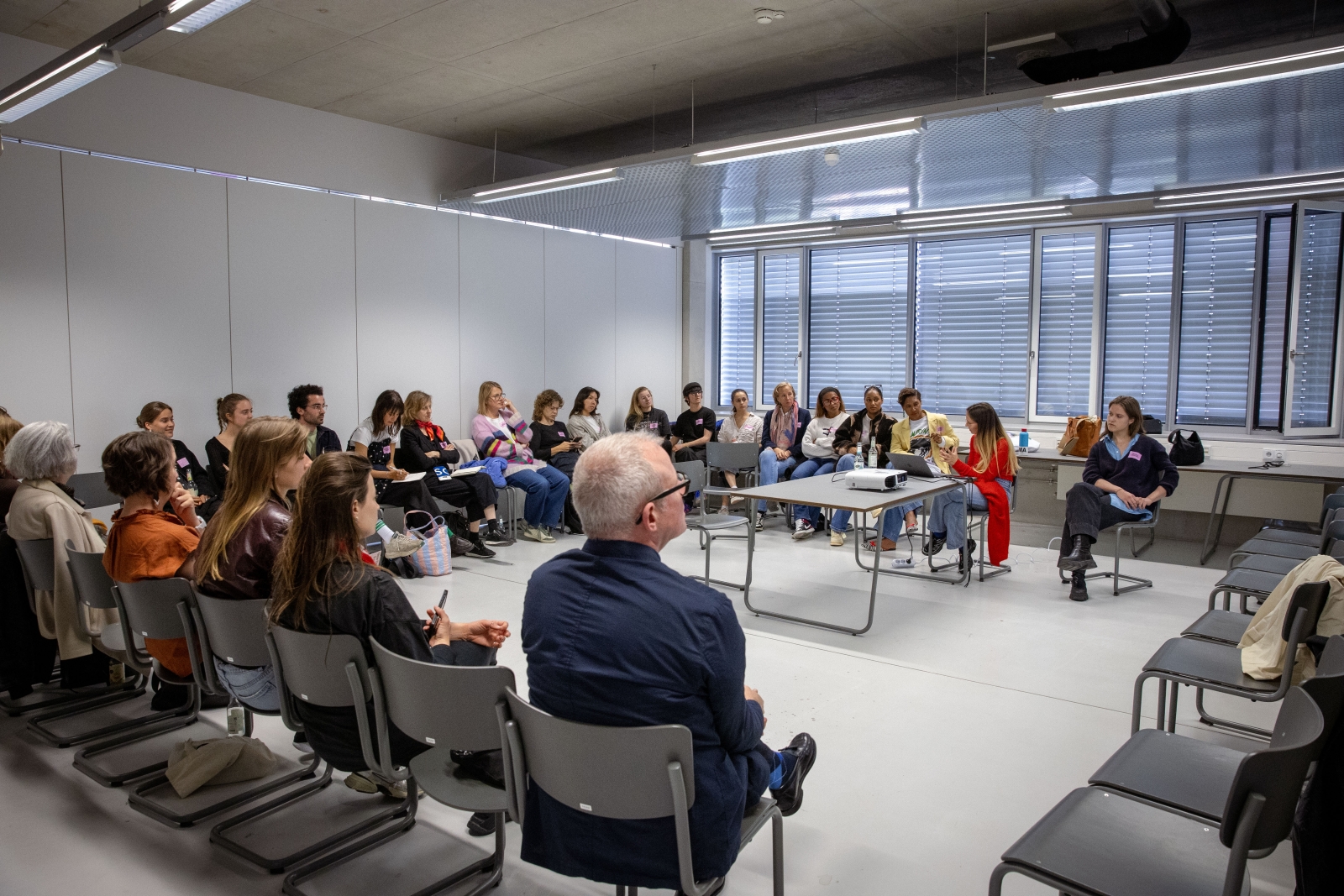
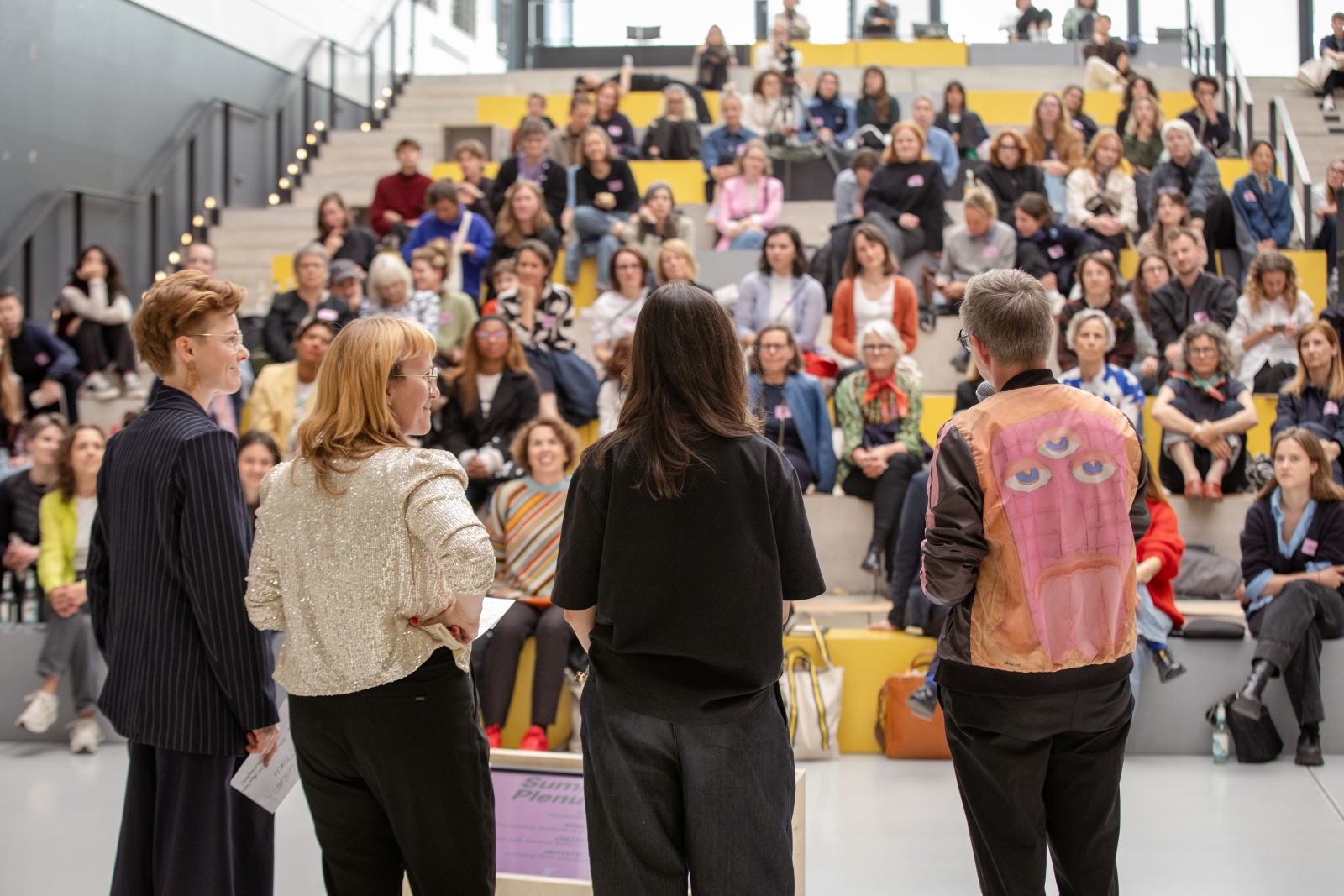
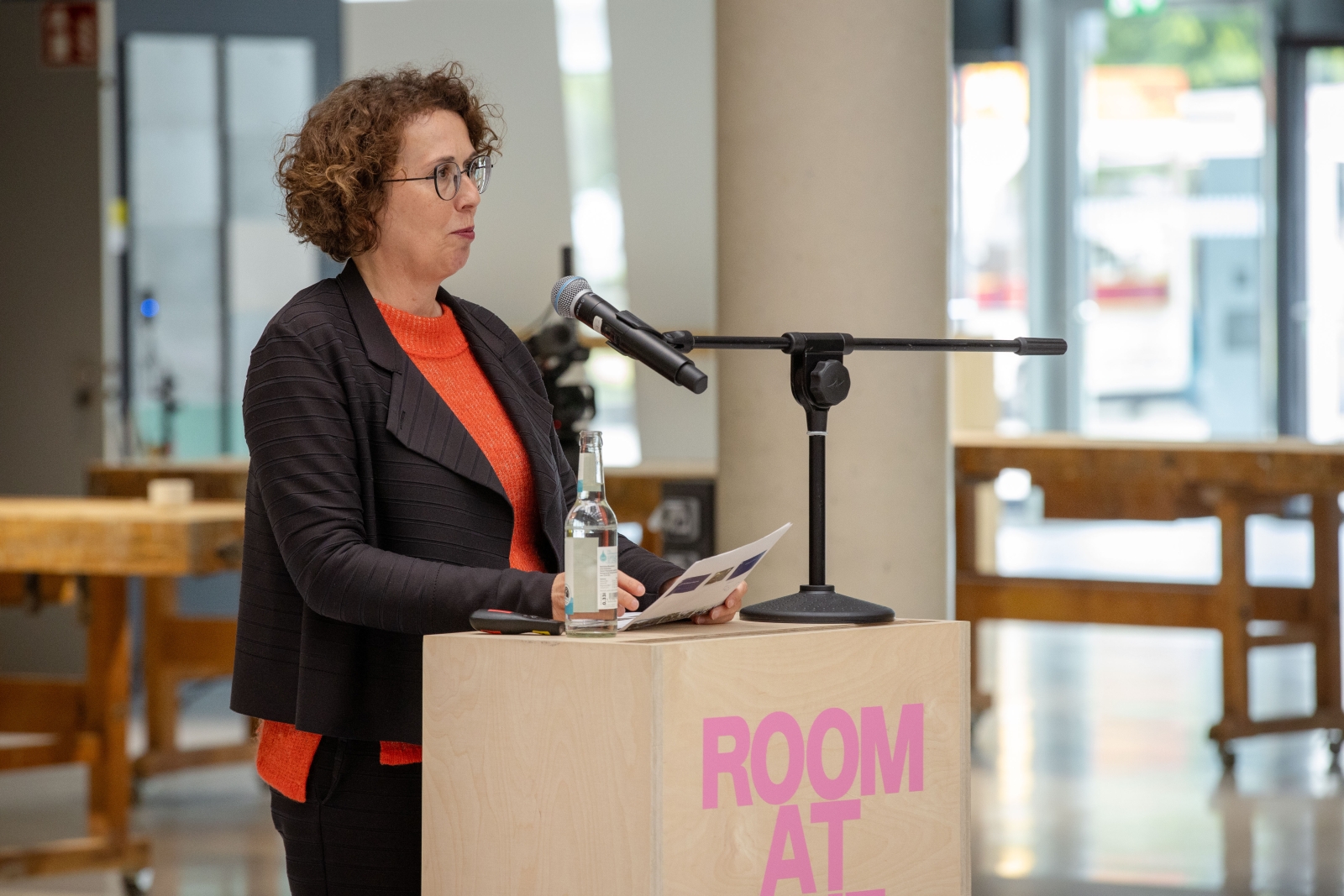
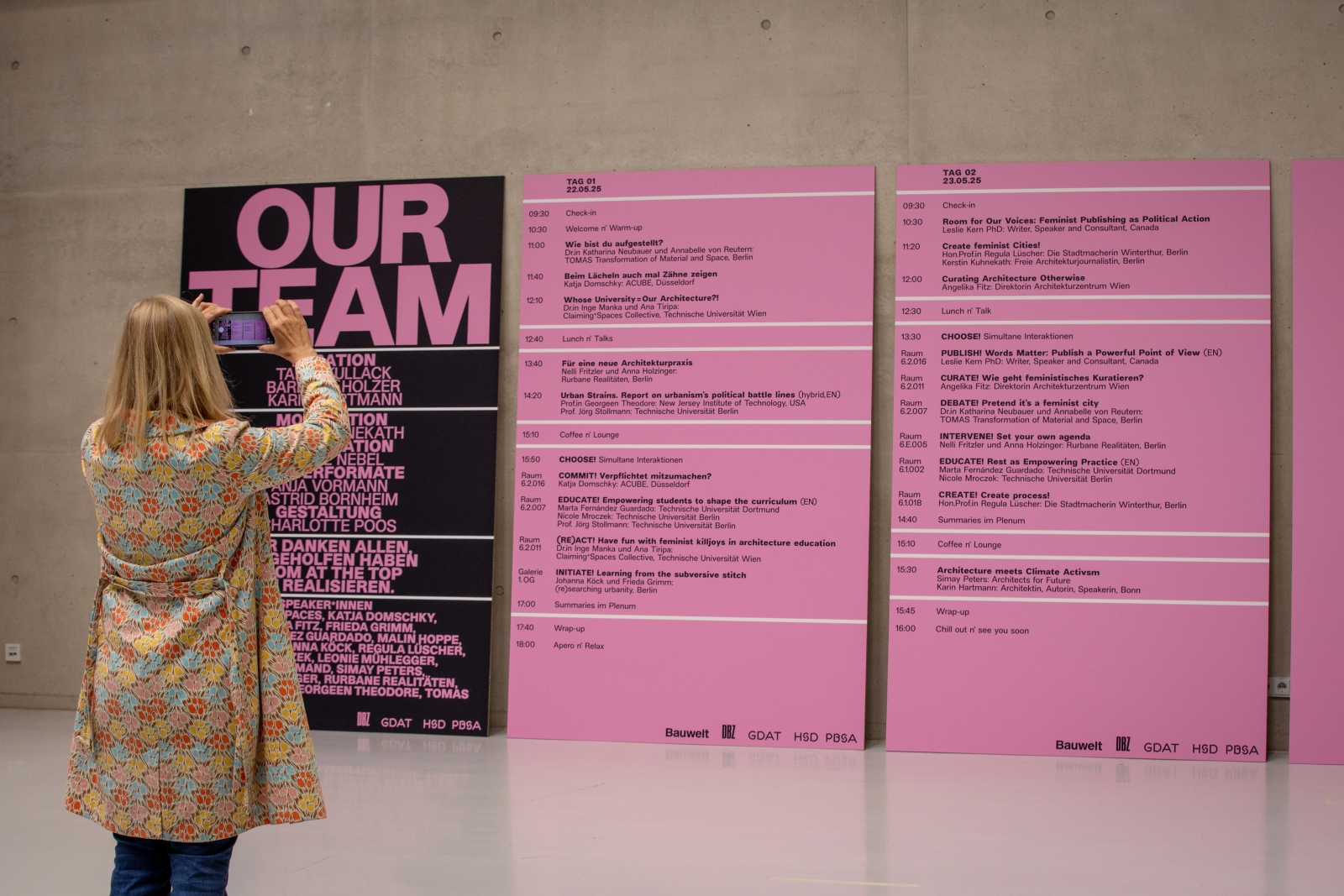
The public symposium Room at the Top! – Feminist Activism as Architectural Practice addresses the significance of feminist activism in architecture. Over the course of two days, participants will discuss how the relationship between architectural practice and feminist political action can be redefined across architectural education, professional practice, and disciplinary discourse.

Barbara Holzer
Karin Hartmann
Tanja Kullack

special thanks:
nadine nebel
charlotte poos
eva wergzyn
anja vormann
laura oldörp
janna lichter

credits © franka brinkmeyer
Plenum ©frankapictures
workshop ©frankapictures
plenum ©frankapictures
angelika fitz ©frankapictures
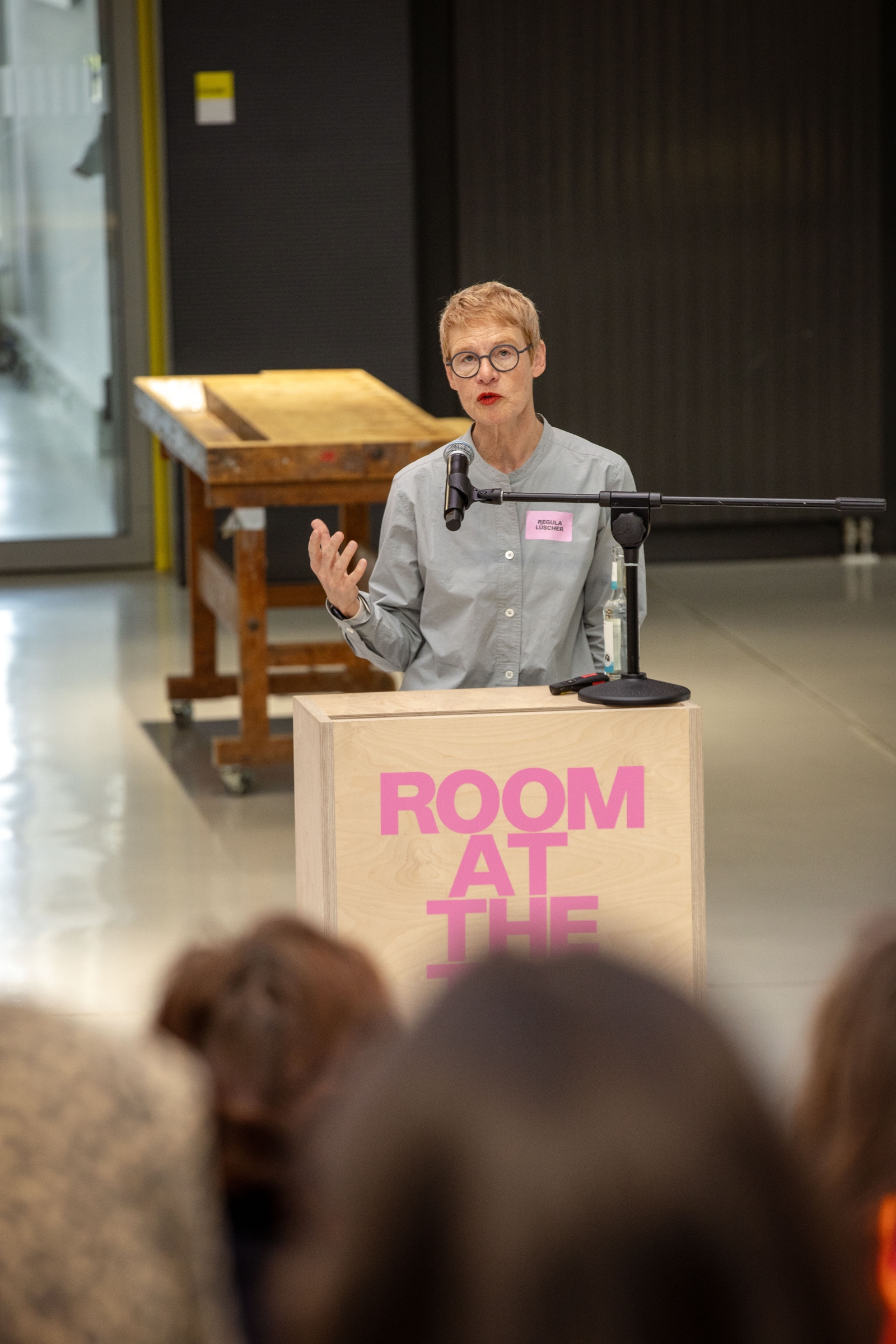
regula lüscher ©frankapictures
katja domschky ©frankapictures
leslie kern ©frankapictures
plenum ©frankapictures
atmo ©frankapictures